
In recent years, Tanzania’s leather sector has witnessed a remarkable shift powered by highly skilled graduates from the Dar es Salaam Institute of Technology (DIT) Mwanza Campus, the Centre of Excellence in Leather Processing and Allied Technologies (CELPAT). Through the World Bank-funded East Africa Skills for Transformation and Regional Integration Project (EASTRIP), young professionals are entering the industry with competitive technical skills, entrepreneurial mindsets, and the confidence to contribute to the manufacturing industry and national growth at large.
Among the success stories are students Tito Machunda from class of 2022, David Marwa from class of 2023, and Anastazia Martine from class of 2024, all graduates of the Leather Processing and Leather Products Technology programmes.
Today, they are all employed at the Kilimanjaro International Leather Industries Company Limited (KLICL), one of the country’s most reputable leather manufacturers. Their employment journey highlights the impact of demand driven training championed by EASTRIP, which has emphasized strong TVET Institutes-Industry Collaborations.
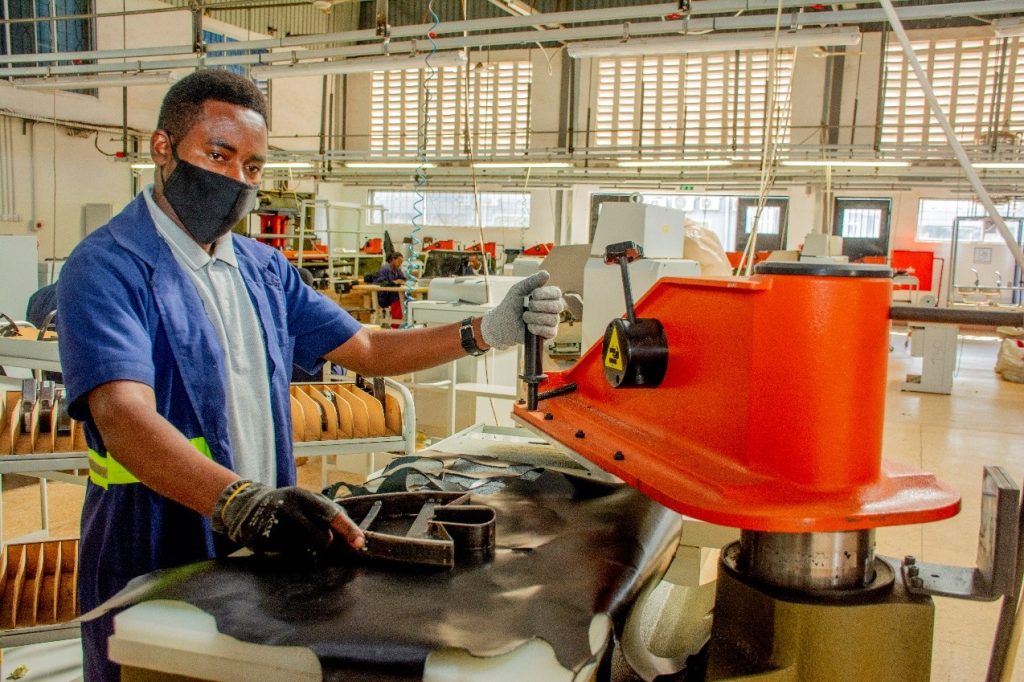
Mr. Dotto Mgusi, a graduate of the Leather Goods Making programme from DIT Mwanza Campus and now an employee at Kilimanjaro International Leather Industries, continues with his duties in the Cutting Department at the factory.
For Tito Machunda, joining KLICL was both a dream fulfilled and a testament to the strong technical foundation he received at DIT Mwanza. “I entered the company ready to operate modern machines, analyze leather quality, and contribute to production improvement.”
Tito now works in the Design and Quality Unit, supporting quality checks that help KLICL meet international export standards in the marketing field.
Similarly, David Marwa credits the EASTRIP aligned curriculum for accelerating his transition from school to a productive job role. “The learning environment at DIT Mwanza closely mirrors a real factory setting this made it easy for me to adapt quickly once I joined KLICL.”
Today, he works in the finishing section, ensuring that final leather products meet durability and texture standards.
Tanzania’s leather sector is benefiting from a new wave of skilled young professionals emerging from the Dar es Salaam Institute of Technology (DIT) Mwanza Campus, the Centre of Excellence in Leather Processing and Allied Technologies (CELPAT). Through World Bank–supported investments under the East Africa Skills for Transformation and Regional Integration Project (EASTRIP), the campus has strengthened its training systems, expanded access, and produced graduates who are immediately ready for industry.
DIT Mwanza’s growth under EASTRIP has been dramatic. Student enrolment increased from just 81 learners at baseline to 3,224 students by June 2025, signalling unprecedented demand for leather and allied technology training. The institution has also attracted learners from across East Africa, with regional student enrolment rising from zero to 233. Graduate employability has improved significantly: 79 percent of graduates now secure employment within six months, and female graduate employment stands at 67 percent, evidence of strong industry relevance and growing opportunities for women in technical fields.
The campus has also developed 15 new accredited, demand-driven programmes and strengthened its industry partnerships to 11 MoUs, ensuring that training remains aligned with production needs. Upgraded workshops and laboratories, now 60 percent to 97 percent complete, have enhanced practical learning conditions, giving students exposure to modern leather technologies.
One of the most inspiring stories is that of Anastazia Martine, whose career journey highlights the increasing visibility and success of women in technical industries. At KLICL, she serves in the Product Design and Leather Article Quality Unit. “Being a woman in this field is very inspiring. DIT Mwanza gave me the technical confidence and practical exposure I needed to excel.”
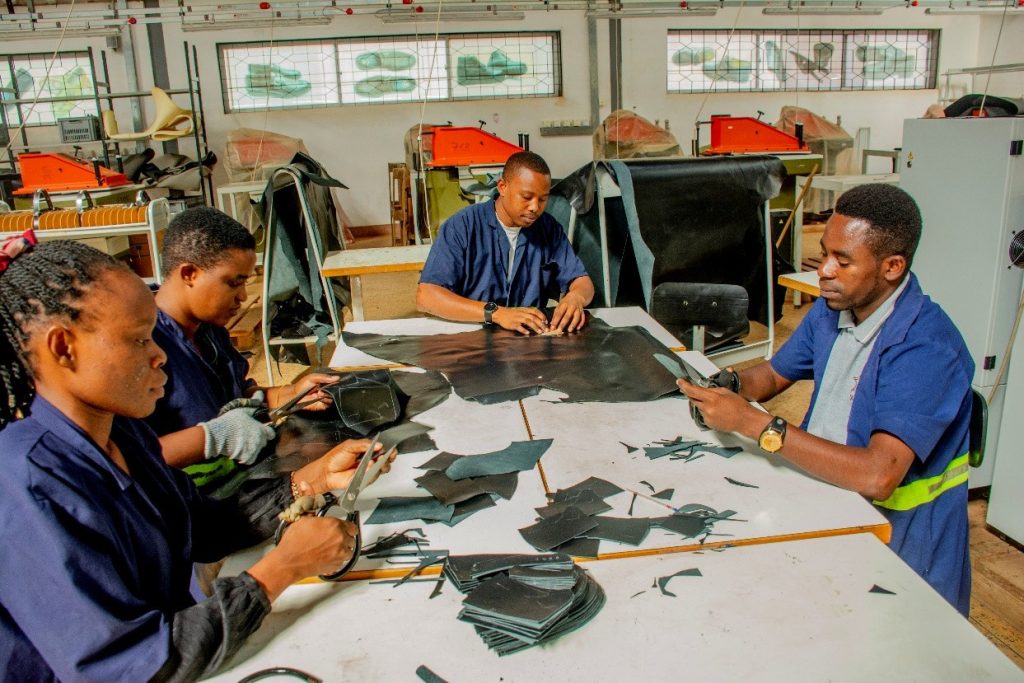
Graduates of DIT Mwanza Campus at Kilimanjaro International Leather Industries Company Limited
KLICL has continued to absorb more DIT graduates who are making significant contributions across various production lines:
Happyness Kema Benjamini (Class of 2023), a graduate of Leather Product Technology, began her journey in entrepreneurship producing handbags, belts, and wallets before joining KLICL. In July 2025, she secured a government appointment as a tutor at Moshi Technical Secondary School, teaching leather product manufacturing.“DIT Mwanza prepared me for both business and employment skills that opened unexpected doors.”
Bernadeta Busulu (Class of 2022), Leather Goods & Footwear graduate, is employed in the Production and Finishing Unit at KLICL.“Working at KLICL has strengthened my craftsmanship and deepened my understanding of industrial standards.”
Dotto Mgusi (Class of 2024) serves in the Cutting Department. “DIT gave me the discipline and accuracy required in the cutting section.”
Eusebius Dominic, employed in Leather Tanning and Solid Waste Processing, contributes to environmental sustainability in production. “My training in leather chemistry guides me daily in ensuring efficient processes.”
Mabula John Myete (Class of 2022), a Leather Product Technology graduate, was first employed at VETA Dakawa and is now a government tutor at Moshi Technical Secondary School, training students in leather product manufacturing. “I am proud to transfer the knowledge I gained at DIT to the next generation of artisans.”
Furaha Seleman and Khadija Hamis Tanisa, both DIT graduates, are successfully self-employed in Mwanza, producing and selling leather products. DIT equipped us to create our own opportunities and contribute to Tanzania’s leather value chain,” they said.
KLICL’s Human Resource Manager, Mr. Abedinego Atungoza Aliwagesa, applauds DIT graduates for their industry readiness: “Graduates from DIT Mwanza Campus arrive with practical skills and a strong understanding of modern leather technologies. Their contribution has significantly strengthened our production efficiency and innovation capacity.”
These success stories reflect the broader impact of EASTRIP supported training at DIT Mwanza Campus competency-based instruction, strong laboratory exposure, and industry-linked attachments, all ensuring graduates become employable and innovative.
As Tanzania advances its industrialization agenda, the collaboration between DIT Mwanza Campus and KLICL demonstrates what is possible when education and industry align with purpose. Their shared success proves that with the right training, young professionals can significantly elevate the nation’s leather industry.
By Joshua Kasase, Public Relations Officer, Dit Mwanza
