
When Liberian student George Bartuah boarded a flight to Tanzania to join the National Institute of Transport (NIT), he carried with him the hopes of thousands of young Africans seeking a better future through technical skills.
“Many countries have invested in air transport, but the biggest challenge is the shortage of manpower, especially cabin crew,” he said during an earlier interview at the institute in Dar es Salaam. “The knowledge I’m gaining will not only help Liberians but also benefit the entire African continent.”
Bartuah is part of a growing number of young Africans moving across borders in search of practical training and new opportunities. Their determination reflects a changing mindset, one that views skills, not just degrees, as the true pathway to employment and dignity.
However, every month, more than a million young people join Africa’s job market, but only a fraction find formal work. Nearly a quarter of youth are not in education, employment, or training, while 86 percent of 10-year-olds cannot read a simple text, according to the World Bank. It is a crisis that threatens the continent’s ability to harness the energy and creativity of its largest generation in history.
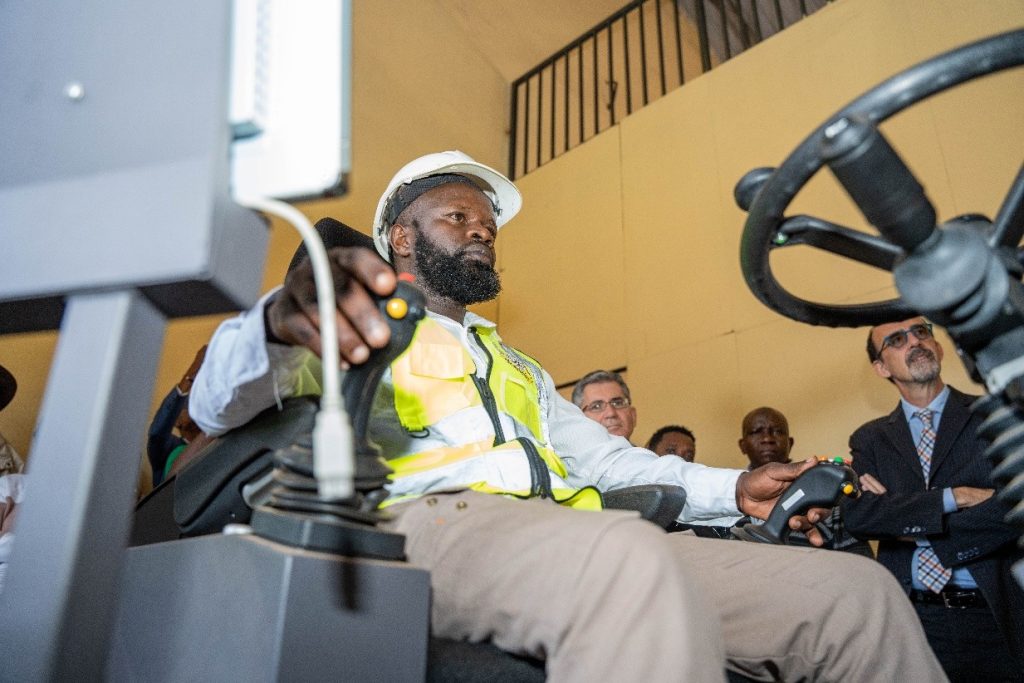
A trainer at the Kenya Institute of Highways and Building Technology, the Regional Flagship TVET Institute in Building Technology, under EASTRIP, demonstrates how to use a simulator to enhance practical training for students
A Continental Effort to Bridge the Gap
It is against this backdrop that the World Bank in Partnership with the Inter-University Council for East Africa (IUCEA), organized the Africa Skills for Jobs Policy Academy, which took place in Nairobi, Kenya from 29 September to 5 October 2025. The Academy brought together more than 300 policymakers, education leaders, and private sector players from over 20 African countries to reimagine how technical and vocational education can unlock employment and reduce poverty.
At the opening of the Academy, Mamta Murthi, the World Bank’s Vice President for People, described the initiative as part of the institution’s strategic shift to focus more sharply on jobs and workforce development. She pointed out that technological change, artificial intelligence, and the green transition are transforming global labour markets, and that African countries must invest in adaptive, inclusive training systems that prepare people for these shifts
She highlighted the World Bank’s efforts to support countries in collecting data on skills gaps, strengthening partnerships with the private sector, and designing sector-focused programs in energy, health, agribusiness, and tourism. According to Murthi, these initiatives form part of a wider pivot toward evidence-driven and inclusive skills systems that create opportunities for millions of Africans.
Ndiame Diop, World Bank Vice President for Eastern and Southern Africa, reflected that Africa’s economic transformation depends on its ability to align education systems with labour market demands. He noted that the continent’s young population represents a tremendous asset, but that too many are entering a job market unprepared for the realities of modern industry. Diop emphasised that developing integrated “skills ecosystems”, linking schools, training institutions, and employers, is key to creating jobs at scale.
Hon. Rebecca Miano, Cabinet Secretary for Tourism and Wildlife, Republic of Kenya said that Kenya is expanding access to TVET institutions, targeting an increase in enrolment from 700,000 to two million students by the end of the year. “Kenya’s reforms prioritise partnerships with industry to embed dual training models that combine classroom learning with workplace experience,” she said.
EASTRIP’s Lessons
The discussions in Nairobi built on the success of the East Africa Skills for Transformation and Regional Integration Project (EASTRIP), a World Bank–funded project that has reshaped technical training in Ethiopia, Kenya, and Tanzania.
Since 2019, 16 Regional Flagship TVET Institutes under EASTRIP have forged more than 300 partnerships with private companies and developed over 500 industry-aligned training programmes, up from just 34 before the project began. Graduate employment rates have climbed from 47 percent to 80 percent within six months of graduation. The share of women in technical fields has also risen sharply, with female employment increasing from 51 to 74 percent.
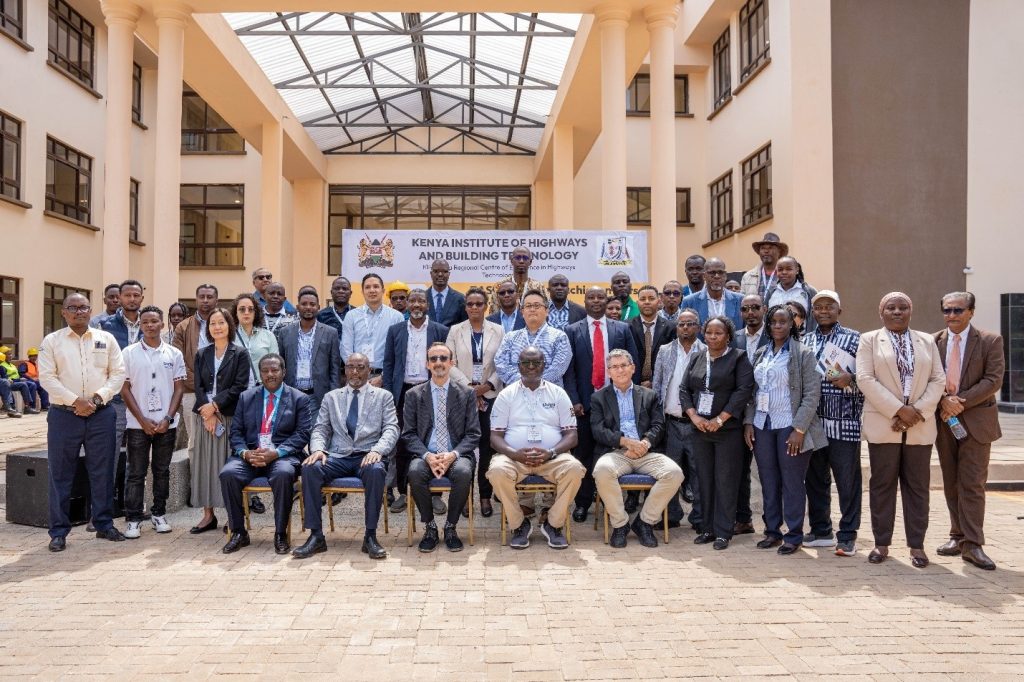
Luis Benveniste, the World Bank’s Global Director for Education (Center) with Participants from Africa Skills for Jobs Policy Academy during a visit to the Kenya Institute of Highways and Building Technology, the Regional Flagship TVET Institute in Building Technology, under EASTRIP.
At Tanzania’s National Institute of Transport, for example, the project’s results-based financing model and close collaboration with private companies have boosted institutional revenues and improved employment outcomes. “When training aligns with industry needs, the results are immediate,” observed Dr. Prosper Mgaya, the institute’s rector.
The project has also enhanced female participation, with women now making up nearly one-third of enrolments in traditionally male-dominated technical fields. Female enrolment has increased from about 2,000 across all the 16 regional flagship TVET institutes to over18,000 students, surpassing the project’s target of 13,861, while female employment after graduation has risen from 51 percent to 74 percent
The progress reflects deliberate gender inclusion measures, such as scholarships, safe accommodation, and targeted mentorships that encourage young women to pursue careers in engineering, transport, and energy.
Human Stories Behind the Statistics
For many delegates in Nairobi, the Policy Academy was the beginning of a continental movement to reform how skills are taught, financed, and linked to jobs. The sessions explored results-based financing, public-private partnerships, recognition of prior learning, and the use of micro-credentials to make training more flexible and inclusive. Participants also examined how digital technologies and bilateral training agreements can help countries prepare workers for both domestic and international markets.
In his closing reflections, Luis Benveniste, the World Bank’s Global Director for Education, urged African governments to move beyond policy discussions toward practical partnerships that generate jobs. He noted that while system-level reforms take time, collaboration with industries in sectors such as energy, manufacturing, agribusiness, and tourism can yield quick and visible results.
Benveniste also highlighted four pillars necessary for sustainable transformation, including sound governance, quality standards, predictable financing, and strong data systems. He added that expanding lifelong learning and digital skills training would be vital for young Africans to remain competitive in a rapidly evolving global economy.
The Promise of a Skilled Continent
As Africa’s working-age population is set to double by 2050, the stakes could not be higher. Without jobs, the continent risks wasting its greatest asset—its youth. But with the right skills and policies, that same generation could power Africa’s transformation.
Hon. Haja Ramatulai, the Minister of Technical and Higher Education, Republic of Sierra Leone commended the Academy for fostering collaboration among countries facing similar youth employment challenges. She observed that the skills crisis in Africa is not confined by borders and requires a shared response anchored in regional cooperation.
Hon. Ramatulai emphasised that strengthening technical and vocational education must go hand in hand with improving access and inclusion for women and disadvantaged groups. She added that when African nations share lessons and co-design training frameworks, they create opportunities that extend beyond national economies to benefit the entire continent.
By Godwin Bonge Muhwezi, Project Communication Specialist for EASTRIP at Inter-University Council for East Africa.
