
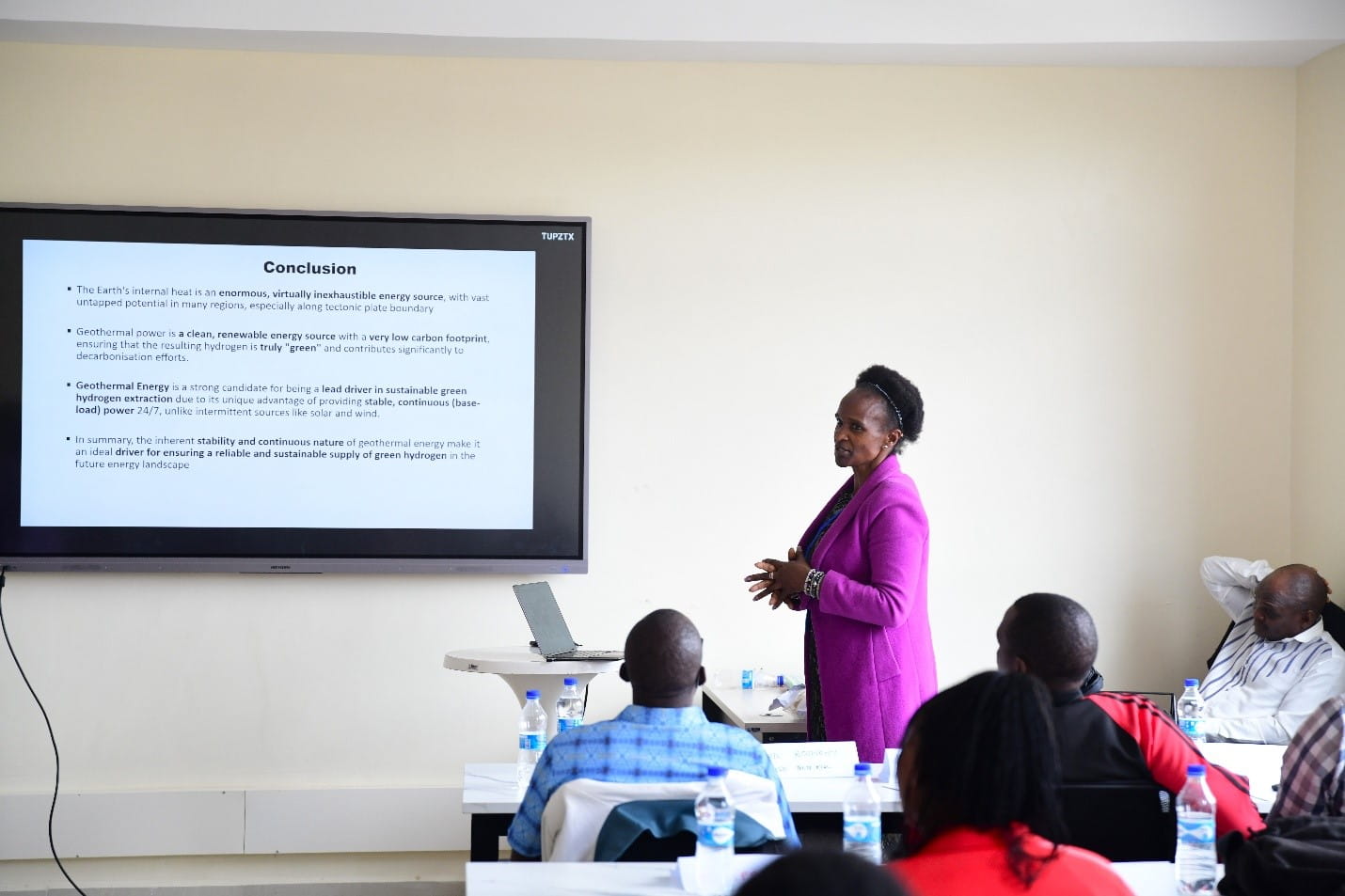
KenGen Geothermal Training Centre conducted a pre-test of the Green Hydrogen Unit of Learning as part of the requirements set by the Technical and Vocational Education and Training Authority (TVETA). The exercise led by Dr. Samuel Maina, one of the KenGen GTC trainers, featured an introductory presentation on green hydrogen and its applications, setting the stage for a practical review of the newly developed training content.
The students and staff undergoing training at the facility served as the pilot cohort for the pre-test and displayed remarkable enthusiasm throughout the session. They followed keenly as Dr. Maina simplified complex concepts, breaking down technical jargon into clear, practical insights. An engaging question-and-answer session followed, offering a valuable platform for clarification and feedback. At the close of the session, the students were provided with learning materials to support further study and reinforce the concepts covered.
This pre-test is part of the project. “Developing the Foundations of a Green Hydrogen Economy (GH₂ Foundations),” implemented by the German Development Cooperation (GDC) through the Deutsche Gesellschaft für Internationale Zusammenarbeit (GIZ), in partnership with Kenya’s Ministry of Energy and Petroleum and the Ministry of Education.
The initiative aims to integrate Green Hydrogen (GH₂) and related technologies into Kenya’s Technical and Vocational Education and Training (TVET) system by developing relevant learning content aligned with the skills and competencies required in the emerging sector. As part of this effort, specialized units of learning and units of competency have been developed and are undergoing pre-testing before their formal integration into the national TVET curriculum.
The pre-testing process allows trainers, trainees, and institutions to evaluate the learning content in a real training environment and provide structured feedback. This is essential to ensure the units are relevant, practical, and effectively meet their intended objectives. The process assesses alignment of GH₂ competencies with industry needs and occupational standards and evaluates the feasibility of delivering the units within existing institutional capacities.
Additionally, it involves identifying topics suitable for integration into current curricula or as standalone modules. It also examines trainee engagement, workload, and assessment approaches, while determining the tools, equipment, and infrastructure required for effective delivery. Ultimately, the exercise is expected to generate evidence-based recommendations to guide curriculum integration, accreditation, and eventual national rollout.
Green hydrogen is a clean and sustainable energy carrier produced through electrolysis, where water is split into hydrogen and oxygen using electricity from renewable sources such as solar, wind, or geothermal power. Unlike conventional hydrogen production methods that rely on fossil fuels, green hydrogen generates no greenhouse gas emissions during production. It is increasingly recognized as a potential key driver of the global energy transition, playing a vital role in reducing carbon emissions while fostering sustainable economic growth.
By Anne Sunkuyia, Senior Information Scientist at KenGen Geothermal Training Centre.
