
Eusebius Dominic, Sada Hussein, and Joshua are graduates of the Leather Processing and Leather Product Technology programmes at DIT Mwanza. The training, supported under East Africa Skills for Transformation and Regional Integration Project (EASTRIP), gave them practical skills that helped them move from the classroom into real industrial jobs.
DIT Mwanza’s partnership with the Kilimanjaro International Leather Industries Company Limited (KLICL) has played a key role in this transition. Through industrial attachments and close collaboration with instructors, students are exposed to actual production environments before they graduate. For KLICL, this means recruiting young people who already understand how the factory works.
Eusebius now works in KLICL’s Tannery Quality Control Department. Quiet by nature, he is known among his supervisors for being careful and precise. His interest in leather technology grew during his industrial attachment, where he spent time on the production floor and learned how quality is maintained at each stage. “What we practiced at DIT Mwanza is exactly what I do at work,” he says. “I inspect hides, sort materials, and support quality checks. The training prepared me well.”
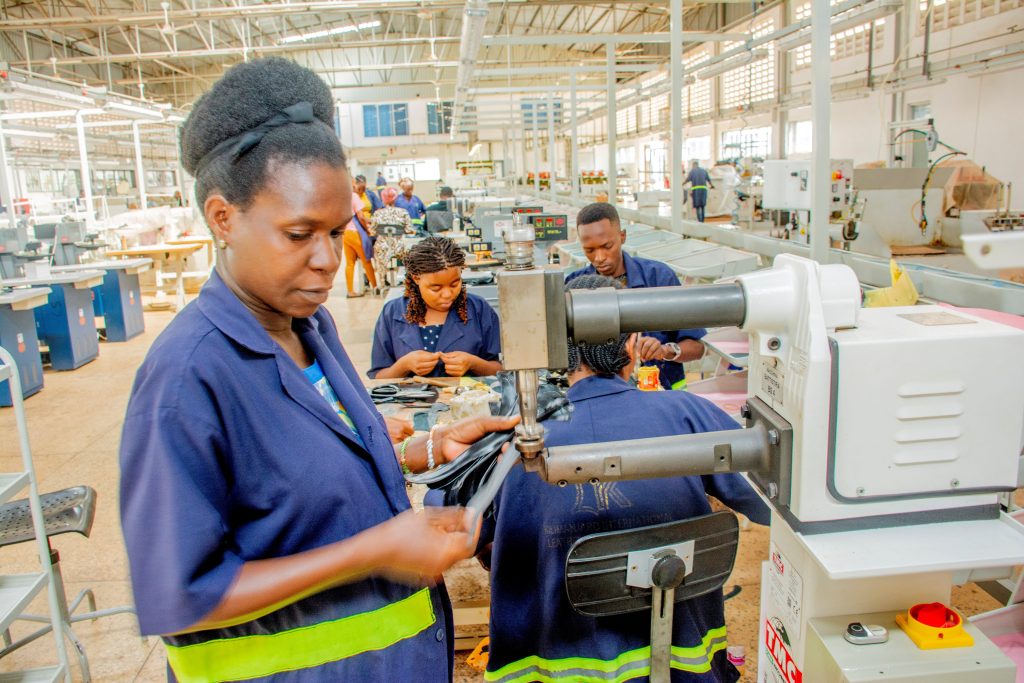
Sada, a graduate from the Class of 2022, works in KLICL’s Footwear Manufacturing Unit. She is involved in cutting, stitching, and assembling leather footwear. Working in a factory environment was not something she imagined when she first enrolled, but the hands-on training gave her confidence. “DIT Mwanza taught us by doing,” she says. “Now I am part of a team that produces footwear made in Tanzania.” She hopes her journey will encourage more young women to consider careers in manufacturing.
Joshua, who graduated in 2024, works in the Semi-Finished Leather Line at KLICL. His role involves supporting production processes and improving efficiency on the factory floor. He says the technical skills he gained at DIT Mwanza, especially in machine operation and leather chemistry, help him solve problems as they arise. “I like finding ways to make things work better,” he explains. “Every day, I learn something new.”
According to KLICL’s Human Resource Manager, Mr Abedinego Atungoza Aliwagesa, the company has had a good experience working with DIT Mwanza graduates. “We have employed several of them, and they fit well into our operations,” he says. “They are disciplined, willing to learn, and understand the basics of modern manufacturing.” He adds that their presence has supported product improvement and helped the company meet quality standards required for wider markets.
The experiences of Eusebius, Sada, and Joshua show the value of training that is closely linked to industry. At DIT Mwanza, students learn in workshops, laboratories, and factories not just in classrooms. As a result, many graduates are finding formal employment soon after completing their studies, while others are starting small businesses.
Their stories reflect the growing role of skilled young people in Tanzania’s leather industry. With the right training and strong partnerships between training institutions and industry, technical skills can lead to steady jobs, stronger local industries, and long-term economic growth.
By Joshua Kasase, Public Relations Officer Dit Mwanza
