
Olivier is a female student currently enrolled in the Craft Certificate in Road Construction program at KIHBT. She is one of the 72 beneficiaries of the EASTRIP KIHBT scholarship targeted at vulnerable young women in Kenya. Despite having scored an average of C- grade in her Secondary Education finals in 2017, Olivier had been hawking coffee and mandazi in one of Nairobi’s informal settlements to help support her family, when she received a notification to attend an interview at KIHBT Nairobi. She had been shortlisted by the scholarship committee and was potentially poised to be one of the beneficiaries of the project. Olivier was successful in her interview and was admitted into the scholarship program. She has maintained high grades since her enrolment and has been one of the students maintaining a distinction grade in all the assessments she has undertaken so far. Olivier’s ambition is to be a Civil engineer, she’s looking forward to completing her Craft Certificate and perhaps get an opportunity to study a diploma and eventually pursue a degree.
“I faced significant challenges paying school fees during my secondary education and had nearly lost hope of ever joining a tertiary institution. However, KIHBT and the EASTRIP fraternity came into my life and completely changed my story. I am eternally grateful for the opportunity and support they have given me.” Said Olivier While each of the beneficiaries has a unique story, their background stories collectively speak of inequity, gender-based discrimination, societal biases, and the disproportionate burdens that young African women confront every day.
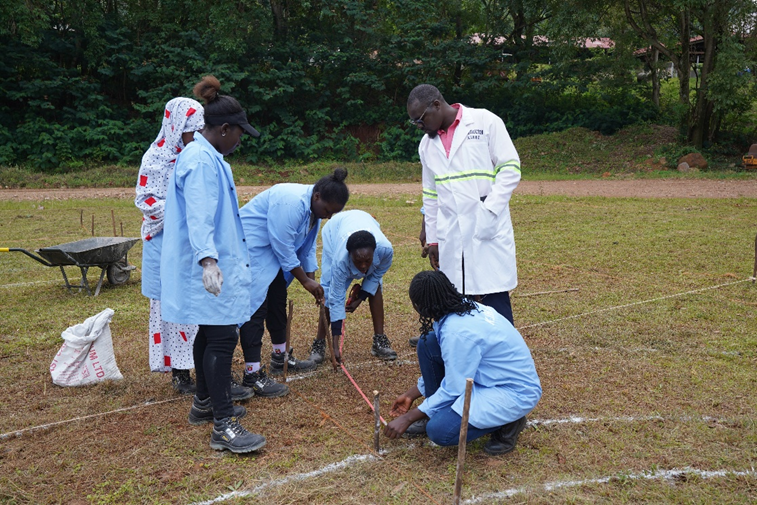
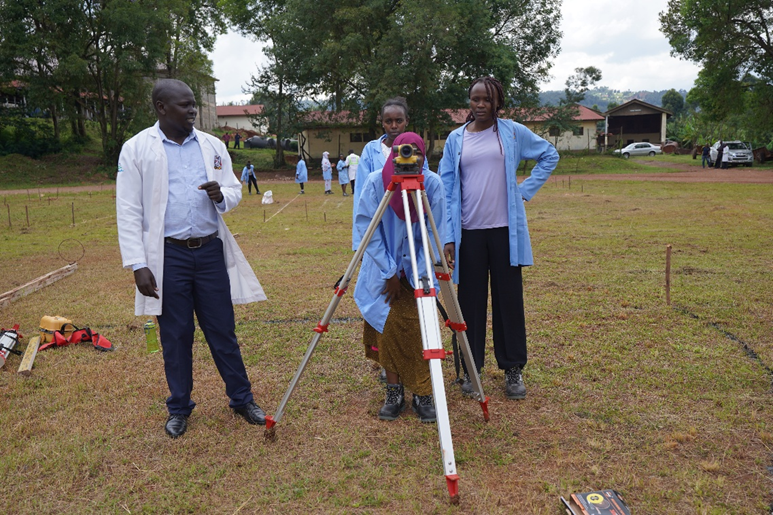
Female students at KIHBT in Practical Sessions
In designing the scholarship programme, the scholarship committee is tasked to regularly monitor the scholarship administration process. The committee has therefore developed a three-pronged action plan which aims to improve and expand the programme for greater reach. The three key areas of focus are: Improvement of the beneficiaries’ Academic Performance, Improvement of beneficiaries’ Health and Well-being, Establishment and Implementation of Communication and Fundraising systems. Sustainability of the programme is to be achieved through the focus area on establishment of fundraising systems aimed at anchoring the scholarship fund in the KIHBT strategic plan and institute budget. Funding will also involve establishing and maintaining partnerships with potential strategic partners, for financial & in-kind support.
In designing the scholarship programme, the scholarship committee is tasked to regularly monitor the scholarship administration process. The committee has therefore developed a three-pronged action plan which aims to improve and expand the programme for greater reach. The three key areas of focus are: Improvement of the beneficiaries’ Academic Performance, Improvement of beneficiaries’ Health and Well-being, Establishment and Implementation of Communication and Fundraising systems. Sustainability of the programme is to be achieved through the focus area on the establishment of fundraising systems aimed at anchoring the scholarship fund in the KIHBT strategic plan and institute budget. Funding will also involve establishing and maintaining partnerships with potential strategic partners, for financial & in-kind support.
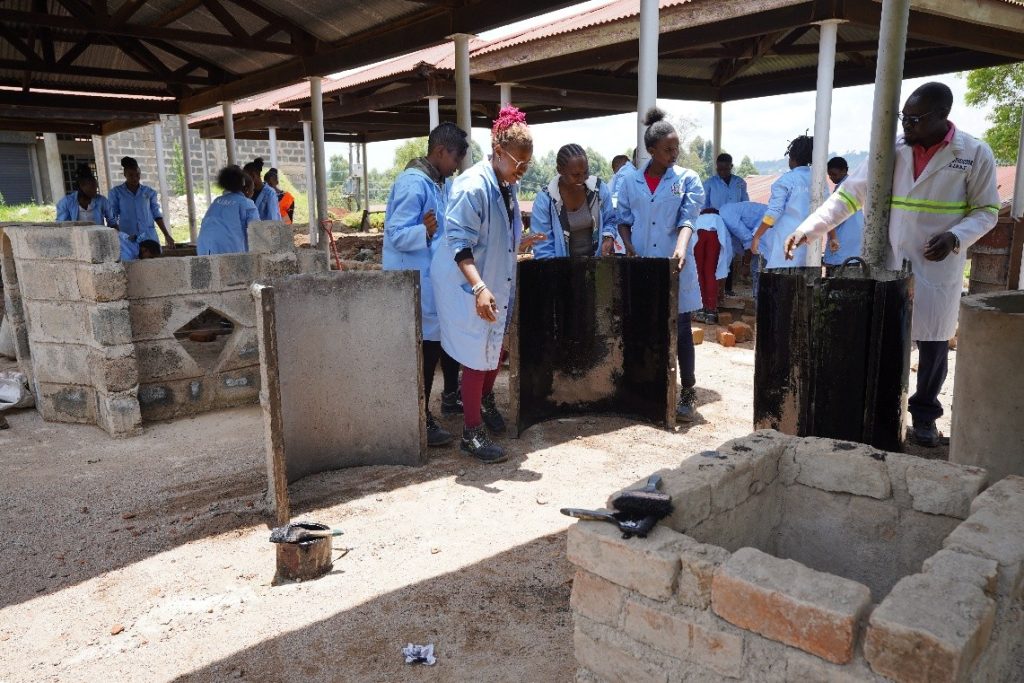
Female students at KIHBT in Practical Sessions
KIHBT entered the programme in a call for good practice in inclusive TVET under the 2024 African Union Development Agency (AUDA-NEPAD) Call for Good Practice. The submission was successful and was among three finalists, competitively selected from a pool of 90 submissions across Africa. The programme has therefore gone continental and has been recognised as a best practice in the Africa Skills Portal for Youth Employment and Entrepreneurship (ASPYEE), which is a continental knowledge sharing platform which enables practitioners and policy makers across the African continent to share, collaborate engage with each other as a means of furthering the African Union’s agenda on skills and employment. The website provides a platform to promote African-owned, innovative approaches derived from experience from the field and research.
In addition, the GiZ Skills Initiative for Africa (SIFA) has been a key partner in packaging the KIHBT EASTRIP scholarship programme as a good practice replicable across Anglophone and Francophone countries. The treasure trove on Gender in TVET is a collection of promising gender-responsive and gender-transformative approaches within the TVET sector from the African continent guided by the Reach-Benefit-Empowerment Matrix. The treasure trove is an initiative supported by GIZ Network for Economic Development in Africa (NEDA) – an association of projects and programmes in sub-Saharan Africa and the corresponding departments at GIZ headquarters.
Aligned to this, in July 2025, the scholarship co-ordinator in KIHBT participated in a NEDA joint webinar titled ‘From principles to practice: Leveraging Gender Inclusion Tools to strengthen GIZ programmes targeting TVET and skills development.’
The Reach-Benefit-Empowerment Matrix highlights approaches that not only challenge existing social norms and values regarding women and girls but also highlight the barriers that hinder their active participation in the economy and contribution to family well-being.
Therefore, the KIHBT EASTRIP scholarship programme was selected for its vulnerability assessment tool which was found to be innovative, easily replicable and adaptable to various jurisdictions. The tool was utilized at the final stage of shortlisting and was aimed at determining the levels of applicants’ vulnerability. The committee came up with parameters of vulnerability on which to base their decision. These parameters were then assigned a rating on a scale of 1-5, on which to rate the level of vulnerability. These are:
- Whether the applicant is a PWD
- Whether the applicant is a fully orphaned (both parents deceased)
- Whether the applicant is a partial orphan (one parent deceased)
- Whether the applicant is from a single-parent family
- Whether the applicant has a child
- Whether the applicant has a parent or sibling who is a PWD
- The number of siblings an applicant has
The assigned rate was used to assign points to an applicant, and the applicant with the highest score would be considered the most vulnerable. The application letters (which were a compulsory requirement during application) were read at this stage to determine their level of vulnerability and consider it in the ranking.
The parameters of vulnerability were informed by the range of social factors affecting the meaningful participation of young female adults in tertiary education. While women are already disproportionately disadvantaged when it comes to access to TVET education, other factors increase their vulnerability. These are:
The KIHBT EASTRIP programme has been described as timely, impactful and transformational. It is an initiative that has successfully leveraged on the power of TVET as an engine of economic restructuring and transformation, as well as its potential to promote social inclusiveness and poverty alleviation as it tends to attract students from lower socioeconomic backgrounds who have lower probabilities of reaching higher education. In addition, the experiences and data drawn from this scholarship programme would be instrumental in informing policy and mainstreaming the ideals of women and girls’ empowerment within key local, national and regional institutions.
By Patricia Baariu, Principal Lecturer/KIHBT EASTRIP Outreach and Scholarship Programme Co-ordinator.
